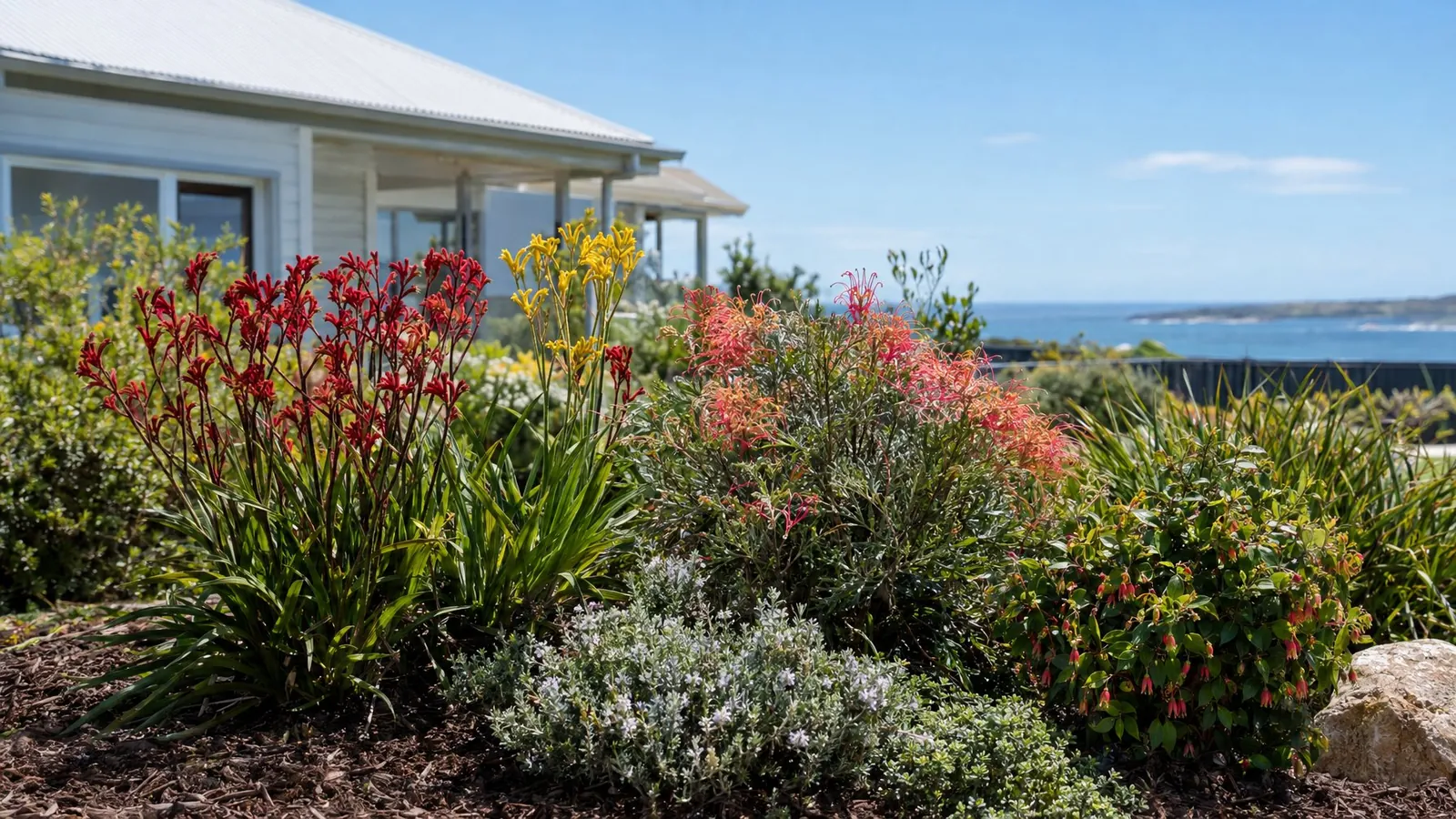
Plants that suit the region
The City of Greater Geelong publishes Indigenous Plants of the Geelong Region info sheets for 19 zones, each describing the soil, the rainfall and the plants that grow there naturally. Indigenous plants are adapted to the local soils and dry summers, need little water once established and support local wildlife. Coastal gardens need plants that cope with salt-laden winds; the council's coastal zone sheet lists dune species such as Coast Wattle, White Correa and Cushion Bush.
Soil and mulch
Clay soils benefit from organic matter worked into new beds and from raised beds where drainage is poor. A layer of mulch about 75 mm deep keeps moisture in and weeds down through summer.
What it costs in Geelong
A published cost guide's Geelong estimates (October 2026, GST inclusive) put a new garden bed, with soil preparation, edging, plants and mulch, at $46 to $165 per square metre, mulch supplied and spread at $7 to $22 per square metre and a single-zone drip system for garden beds at $745 to $2,050.
| Job | Geelong estimate (October 2026) |
|---|---|
New garden bed | $46 to $165 per m² |
Mulch, supplied and spread (about 75 mm) | $7 to $22 per m² |
Drip irrigation for beds, one zone | $745 to $2,050 |
Automatic irrigation, front and back | $2,325 to $5,600 |
Trees, watering and bushfire
Removing a large tree may need a planning permit. In most residential zones the Greater Geelong planning scheme needs one to remove or lop a canopy tree at least 5 metres high with a canopy at least 4 metres across, with exemptions (clause 52.37). Watering systems may only run between 6pm and 10am under Barwon Water's permanent water saving rules.
On a bushfire-prone block, layout matters more than individual plants. The CFA's landscaping advice is to create defendable space around the house, keep flammable material away from it, break up continuous vegetation and keep tree canopies apart.
Garden makeover FAQs
What can I plant on my nature strip?
In Greater Geelong, low plants within set height limits, drought-tolerant grass or mulch, following the council's nature strip guidelines. Thorny, poisonous and weed species, synthetic turf and loose stones are not allowed, and the council asks you to register a nature strip garden.
When is the best time to plant?
Autumn and spring, when the soil is moist and the heat is not yet at its peak. Summer planting needs far more water.